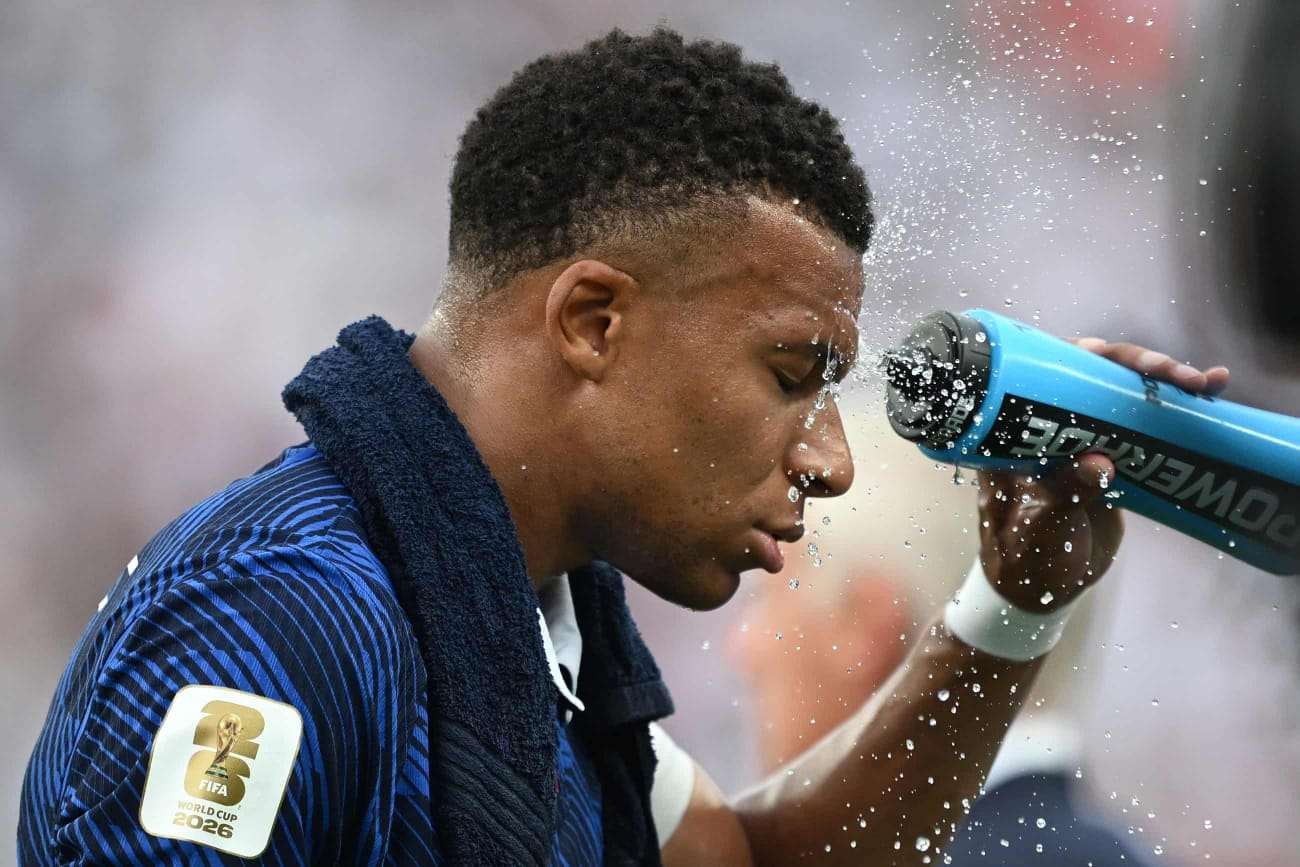
As Spain celebrated its victory at the 2026 FIFA World Cup, fans around the globe focused on dramatic goals, tense penalty shootouts, and the rise of a new generation of football stars. Yet amid the excitement, another feature of the tournament quietly captured worldwide attention: the frequent use of hydration breaks.
At first glance, the rule appears straightforward. Referees pause the match for a few minutes so players can drink water, cool their bodies, and recover before play resumes.
Hydration breaks are not new to sports. Tennis, basketball, volleyball, and marathon running have long adopted similar measures during extreme heat. FIFA first introduced the practice at the 2014 World Cup in Brazil, and it has since become standard whenever temperatures and humidity reach levels that threaten players’ health.
From a sporting perspective, the decision is practical and necessary. However, extreme heat is no longer confined to North America. Similar conditions are becoming increasingly common across the world, suggesting that the climate crisis is now reshaping everyday life including professional sports.
Hydration breaks, therefore, can be understood as a form of adaptation rather than a solution. They address the symptoms of a much larger challenge: the accelerating global climate crisis.
Climate Change Reaches the Football Pitch
The widespread adoption of hydration breaks demonstrates that rising temperatures are no longer abstract scientific concerns. Instead, they have become realities that directly affect athletes, competitions, and millions of spectators.
Scientists have repeatedly warned about this trend. The World Meteorological Organization (WMO) reported in its State of the Global Climate 2025 that the period from 2015 to 2025 represents the warmest eleven years ever recorded. Moreover, 2025 ranked among the three hottest years in modern history, with global temperatures approximately 1.43–1.44 degrees Celsius above pre-industrial levels.
Although a 1.4-degree increase may appear modest, it represents the average temperature of the entire planet. Oceans, continents, and the atmosphere are all storing significantly more heat than before. Consequently, that additional energy fuels more frequent heat waves, floods, droughts, melting polar ice, and other extreme weather events.
The dangerous heat that now forces football players to stop for water is therefore not an isolated incident. Rather, it reflects a broader pattern of global warming that continues to intensify.
Scientific evidence clearly explains what is happening. Nevertheless, science alone cannot fully answer why humanity continues to repeat behaviors that drive environmental destruction. That question requires a deeper examination of how people understand their relationship with nature.
Rethinking Humanity’s Relationship with Nature
Environmental philosophy offers one possible answer through its critique of anthropocentrism: the belief that humans occupy the center of the natural world and may therefore exploit it primarily for their own benefit.
This mindset has encouraged widespread deforestation, rising carbon emissions, excessive fossil fuel consumption, and unsustainable extraction of natural resources. As a result, nature often becomes little more than an economic asset rather than a trust that demands responsible stewardship.
Consequently, climate change is no longer merely an atmospheric or scientific issue. It is also a moral one. The ecological crisis reveals how humanity exercises its freedom, technology, and power while often neglecting long-term responsibility. In that sense, today’s environmental emergency reflects not only a crisis of climate but also a crisis of ethics.
The moral dimension explains why religious perspectives remain highly relevant. While science identifies the symptoms and philosophy critiques human assumptions, Islam offers ethical guidance for rebuilding humanity’s relationship with the earth.
The book Environmental Theology: Environmental Ethics in the Islamic Perspective, published through a collaboration between Indonesia’s Ministry of Environment and the Muhammadiyah Central Board’s Environmental Council, argues that the global environmental crisis has reached a level that threatens both humanity and the broader web of life.
The Qur’an likewise presents human beings not as absolute rulers over nature but as khalifah, or stewards of the Earth, as stated in Surah Al-An’am verse 165:
وَهُوَ ٱلَّذِى جَعَلَكُمْ خَلَـٰٓئِفَ ٱلْأَرْضِ وَرَفَعَ بَعْضَكُمْ فَوْقَ بَعْضٍۢ دَرَجَـٰتٍۢ لِّيَبْلُوَكُمْ فِى مَآ ءَاتَىٰكُمْ ۗ إِنَّ رَبَّكَ سَرِيعُ ٱلْعِقَابِ وَإِنَّهُۥ لَغَفُورٌۭ رَّحِيمٌۢ
“He is the One Who has placed you as successors on earth and elevated some of you in rank over others, so He may test you with what He has given you. Surely your Lord is swift in punishment, but He is certainly All-Forgiving, Most Merciful.”
The responsibility as khalifah does not authorize unlimited exploitation. Instead, it calls on humanity to preserve ecological balance while embodying God’s attributes of care and mercy toward creation.
Accordingly, Islam explicitly discourages israf, or excessive and wasteful consumption. Overexploitation damages ecosystems, accelerates global warming, and deprives future generations of the resources they deserve.
From this perspective, Muhammadiyah’s environmental theology views the ecological crisis as more than a technical failure. It is also a failure to fulfill humanity’s moral responsibility as stewards of the Earth.
Hydration breaks therefore offer a powerful metaphor. The world of sports recognized that the human body has limits under extreme heat. Likewise, today’s climate should remind humanity that the planet also has ecological limits. If current patterns continue, the greatest consequences will not fall upon athletes alone. Entire societies will bear the costs of an Earth pushed beyond its capacity to recover.
Perhaps humanity, like the players on the pitch, also needs to pause not for another drink of water, but to reconsider its relationship with the natural world. Because if we refuse to stop exploiting the planet, the next interruption will not be a brief break in a football match. It may become a far more profound disruption to human civilization itself.
Therefore, this issue ultimately leads us to a simple yet profound conclusion:
“What happens to the Earth today and what will happen to it tomorrow is a direct reflection of the way humanity chooses to live upon it.”
References:
- https://www.theguardian.com/football/2026/jul/16/world-cup-heat-players-union
- https://wmo.int/publication-series/state-of-global-climate/state-of-global-climate-2025
- https://khazanah.muhammadiyah.or.id/koleksi/teologi-lingkungan-etika-pengelolaan-lingkungan-dalam-perspektif-islam
Author: Bhisma Rahaditya Handoko
Photo: Hannah Peters / FIFA
The post When Athletes Need Hydration Breaks, What About the Earth appeared first on Muhammadiyah Official Website - English Version.







No comments yet. Be the first to share your thoughts!