EN.MUHAMMADIYAH.OR.ID, YOGYAKARTA – Evi Sofia Inayati, Chairperson of ‘Aisyiyah Central Board, urged Muslims to view taqwa (God-consciousness) as a lifelong process of character formation rather than a spiritual status that is achieved once and for all.
According to Evi, every act of worship ultimately aims to cultivate a believer who exercises self-control, lives by the guidance of the Qur’an and the Sunnah, practices qana’ah (contentment), and consistently prepares for the Hereafter.
She delivered the remarks during the Ahad Pagi Kliwon sermon at Al-Musannif Mosque, the Muhammadiyah Tabligh Institute in Yogyakarta, on Sunday (12/7).
Opening her lecture, Evi noted that Muslims regularly hear calls to cultivate taqwa, particularly during Friday sermons. Nevertheless, she stressed that piety remains a continuous journey that lasts throughout one’s life.
“Every act of worship ultimately leads us toward becoming people of taqwa,” she said. “Piety is a lifelong process that never ends until our final breath.”
Four Pillars of Taqwa
Evi then referred to an athar attributed to Sayyidina Ali ibn Abi Talib describing the four pillars of taqwa. She clarified that the narration is an athar (a report from a Companion of the Prophet) rather than a hadith, yet it offers valuable guidance on the qualities of a God-conscious believer.
The first pillar, she explained, is al-khauf min al-Jalil (having reverent fear of Allah). This fear, she said, is not pathological anxiety but an awareness that every human action remains under Allah’s constant observation.
“The fear referred to here is a conscious concern that our actions may violate Allah’s commands,” Evi said. “That awareness encourages us to live more carefully.”
Such awareness naturally develops self-control, she added. Even when no one else is watching, believers remain mindful of their conduct because they know Allah always sees them.
To illustrate the idea, Evi compared Allah’s watchfulness to a surveillance camera.
“Unlike a CCTV camera, which can be switched off or moved, Allah’s surveillance never ceases,” she said. “When we truly realize that Allah is always watching, we become more cautious and avoid wrongdoing.”
She also pointed to everyday situations, such as taking leftover food from an event without permission. Although seemingly trivial, she said, such moments train people to become honest and trustworthy.
“These small matters shape our moral character,” she said. “Honesty, trustworthiness, and respecting other people’s rights must begin within the family.”
The Family’s Role in Nurturing Faith
The second pillar of taqwa, Evi continued, is al-‘amal bi at-tanzil, making the Qur’an and the Sunnah the primary guides in life.
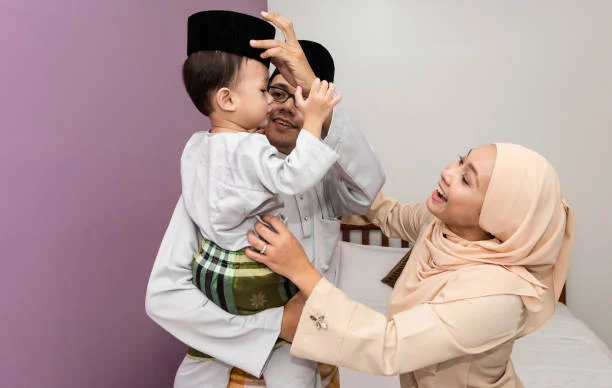
She emphasized that families play a crucial role in nurturing children’s love for the Qur’an from an early age. Parents, she said, should welcome children’s questions about religion instead of dismissing them.
Evi recalled that one of her own children once asked why Muslims follow the Qur’an as their guide. On another occasion, the child questioned whether the fall of the Roman Empire is mentioned in the Qur’an.
“Questions like these should never be discouraged,” she said. “Instead, they provide opportunities to help children understand that the Qur’an is not merely recited but serves as a source of values and guidance.”
According to Evi, the Qur’an contains timeless principles that promote prosperity, justice, equality, respect for human dignity, and peaceful coexistence.
“The Qur’an inspires prosperity, justice, equality, and respect for humanity,” she said. “Islam brings peace, and its teachings aim to promote the common good.”
Therefore, she encouraged Muslims to continue exploring the Qur’an’s enduring values so they can address the challenges of every generation.
She also highlighted the importance of family education in the digital era. Because children now have easy access to vast amounts of information through social media, parents must remain actively involved in their upbringing.
Both fathers and mothers, she said, share equal responsibility for raising their children. A father’s role extends beyond financial support and includes emotional presence.
“Many boys want to talk to their fathers,” she said. “We must avoid the phenomenon of fatherlessness. In a sakinah family, both parents share the responsibility to nurture, educate, and care for their children.”
Contentment and Preparing for the Hereafter
Evi identified al-qana’ah bi al-qalil (being content with Allah’s provisions) as the third pillar of taqwa. However, she emphasized that qana’ah does not mean abandoning effort.
“Contentment is not laziness,” she said. “We should continue striving, remain creative, and work diligently. What must be controlled is our desire to constantly seek more.”
She argued that contentment has become increasingly important in today’s consumer-driven culture. Online shopping platforms, she noted, often encourage people to buy things they do not actually need.
“Without qana’ah, our desires never end,” she said. “Today we want one attractive item, tomorrow another, even though neither is necessary.”
According to Evi, true qana’ah combines gratitude, patience, and perseverance. Together, these qualities protect people from greed and excessive materialism.
The fourth and final pillar is al-isti’dad li yaum ar-rahil (preparing for the day every person returns to Allah).
Evi reminded the congregation that no one knows when death will come. Consequently, every deed performed in this world should be viewed as an investment for the life to come.
“We will all return to Allah,” she said. “Every good deed should become a seed that we will one day harvest in the Hereafter.”
Concluding her lecture, Evi said the four pillars of taqwa strengthen not only a person’s spiritual life but also mental well-being and leadership qualities.
“When we embody these four principles, we develop psychological resilience,” she said. “A person of taqwa is resilient, steadfast, strong, and ultimately successful. These are the qualities we need in leaders, both within the family and throughout society.”
The post Four Pillars of Taqwa Must Begin Within the Family appeared first on Muhammadiyah Official Website - English Version.






No comments yet. Be the first to share your thoughts!